
How to Choose the Right Planter Size: The Complete Guide to Grow Pot Fit
Material Matters

You've spent months — maybe years — learning what your plants need. The right light. The right water. The right soil mix. But when it comes to choosing a planter, most people get the sizing wrong. Not because they don't care, but because the industry has made it unnecessarily confusing.
Planter sizing should be straightforward. You have a plant in a nursery pot. You want a ceramic planter it fits inside. But between inconsistent labeling, outer-diameter measurements, and tapered interiors, "10-inch planter" can mean wildly different things depending on who made it.
This guide breaks down everything you need to know about planter sizing — from how grow pots are measured, to the most common mistakes experienced plant owners make, to a sizing system designed to eliminate the guesswork entirely.
Whether you're potting a 4-inch succulent or upgrading a 17-inch statement Monstera, this is the only planter sizing guide you'll need.
Why Planter Size Matters More Than You Think
Getting planter size right isn't just about aesthetics — it directly affects plant health. The relationship between root space, soil volume, and moisture retention is one of the most critical (and most overlooked) factors in long-term plant care.
The Consequences of Overpotting
When a planter is significantly larger than the root system it holds, the excess soil retains moisture far longer than the roots can absorb it. This creates what horticulturists call a "perched water table" — a zone of saturated soil at the bottom of the container that doesn't drain, even with proper drainage holes. The result: root rot, yellowing leaves, and a slow decline that's hard to reverse. Overwatering creates a boggy environment that breeds fungus and destroys roots — and a too-large pot makes this almost inevitable, even for careful waterers. It's counterintuitive — giving a plant more space can actually harm it.
The Consequences of Underpotting
On the opposite end, a planter that's too small restricts root expansion. The plant becomes root-bound: roots circle the interior walls, nutrient uptake slows, and the soil dries out so rapidly that even consistent watering can't keep up. Top-heavy plants in undersized pots are also prone to tipping, especially outdoors.
The Sweet Spot
For most indoor plants, the ideal pot size is 1–2 inches wider in diameter than the current root ball. For larger plants already in containers above 10 inches, a 2–3 inch increase is appropriate when repotting. But this guidance assumes you're planting directly into soil. If you're using a cachepot method — keeping the plant in its nursery grow pot and placing it inside a decorative planter — the math changes. And that's where most sizing systems fail.

How Grow Pots Are Measured (And Why It Matters)
Before you can choose the right planter, you need to understand how nursery grow pots — the plastic pots your plants come in — are sized.
Standard Nursery Pot Sizing
Nursery pots are labeled by their top diameter, measured across the widest point of the rim. A "6-inch nursery pot" has a 6-inch opening at the top. But here's the critical detail: nursery pots taper. The base is narrower than the top, and the overall height varies by manufacturer and pot style.
Standard nursery pot sizes in the U.S. include:
- 4" — small succulents, herbs, starter plants
- 6" — pothos, small ferns, young tropicals
- 8" — peace lilies, medium philodendrons, dracaenas
- 10" (approx. 3 gallon) — fiddle leaf figs, bird of paradise, rubber plants
- 12" (approx. 5 gallon) — larger tropicals, small indoor trees
- 14" (approx. 7 gallon) — statement floor plants, mature specimens
- 17" (approx. 10–15 gallon) — large trees, architectural plantings
The Inside vs. Outside Problem
This is where things get confusing. When a ceramics company labels a planter as "10 inches," they might be referring to the outer diameter at the widest point (most common), the outer diameter at the rim, or the inner diameter at the opening. These are three different measurements — and the difference can be significant. A planter with thick ceramic walls might have a 10-inch outer diameter but only an 8.5-inch interior opening. Your 10-inch nursery pot won't fit.
This single inconsistency is responsible for more returns, more frustration, and more improperly housed plants than any other factor in the planter industry.
Common Planter Sizing Mistakes (And How to Avoid Them)
Even experienced plant owners make these errors. Here are the five most common planter sizing mistakes — and how to sidestep each one.
Mistake #1: Trusting the Label at Face Value
A "10-inch planter" from Brand A and a "10-inch planter" from Brand B can have vastly different interior dimensions. Without checking the inner diameter and inner height, you're guessing. Always verify the internal measurements before purchasing, especially for the cachepot method.
Mistake #2: Measuring the Outer Rim Instead of the Interior
If you're measuring a planter you already own, the number that matters is the interior diameter at the opening — not the outside edge. Decorative rims, lip details, and thick walls can add 1–2 inches to the external measurement while doing nothing for the space your plant actually occupies.
Mistake #3: Forgetting About Height
A planter can have the right diameter but insufficient depth. If the nursery pot sits too high, the rim of the grow pot will be visible above the planter — or worse, the pot won't drop in at all. Always check both the inner diameter and the inner height of any planter you're considering.
Mistake #4: Sizing Up Too Aggressively
The instinct to "give the plant room to grow" leads many people to jump two or three sizes when repotting. But as we covered above, overpotting creates moisture problems. For cachepot use, the planter only needs to accommodate the current nursery pot — not the next two sizes up.
Mistake #5: Ignoring the Taper
Many ceramic planters taper from the rim to the base. Even if the top opening fits your grow pot, a steep taper can prevent the pot from sitting flat at the bottom. This leads to wobbling, uneven watering, and an awkward visual line where the planter rim meets the foliage.

A Better Sizing System: Named for the Grow Pot, Sized for the Fit
At REVIVAL Ceramics, we built our entire sizing methodology around one principle: eliminate the guesswork.
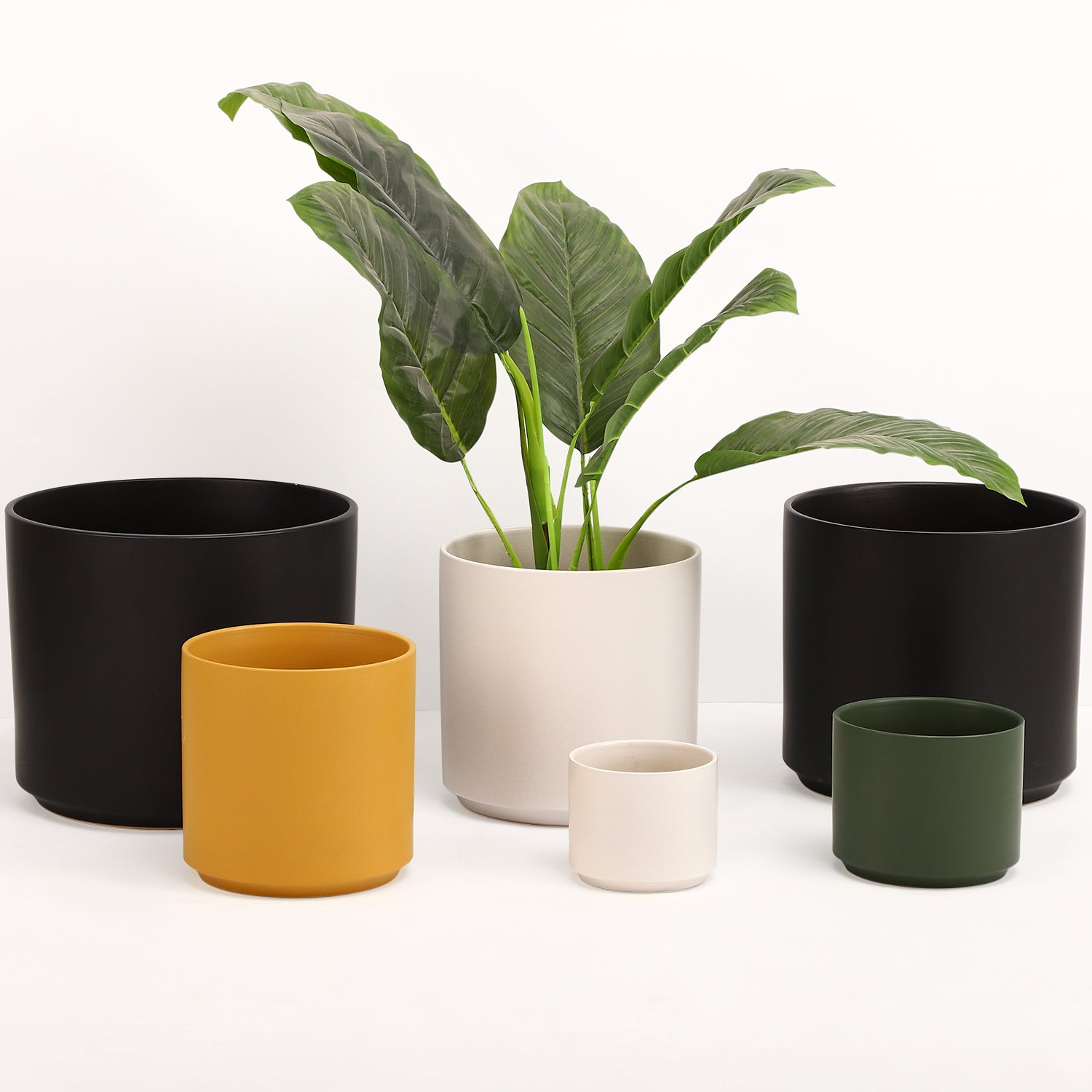
Every REVIVAL planter is named for the standard nursery grow pot it accommodates. Our 10-inch planter fits a standard 10-inch nursery pot. Our 6-inch fits a 6-inch. Our 14-inch fits a 14-inch. The name is the fit.
This isn't just a labeling convention — it's an engineering decision. Each planter's inner diameter and inner height are designed to provide the precise clearance needed for a standard nursery pot to drop in cleanly, sit level, and look intentional.
How It Works Across Collections
Every REVIVAL collection uses the same grow-pot-equals-name sizing system, but each collection has a distinct form, size range, and intended use. Here's what sets them apart:
| Collection | Available Sizes | Design Profile | What Makes It Unique |
|---|---|---|---|
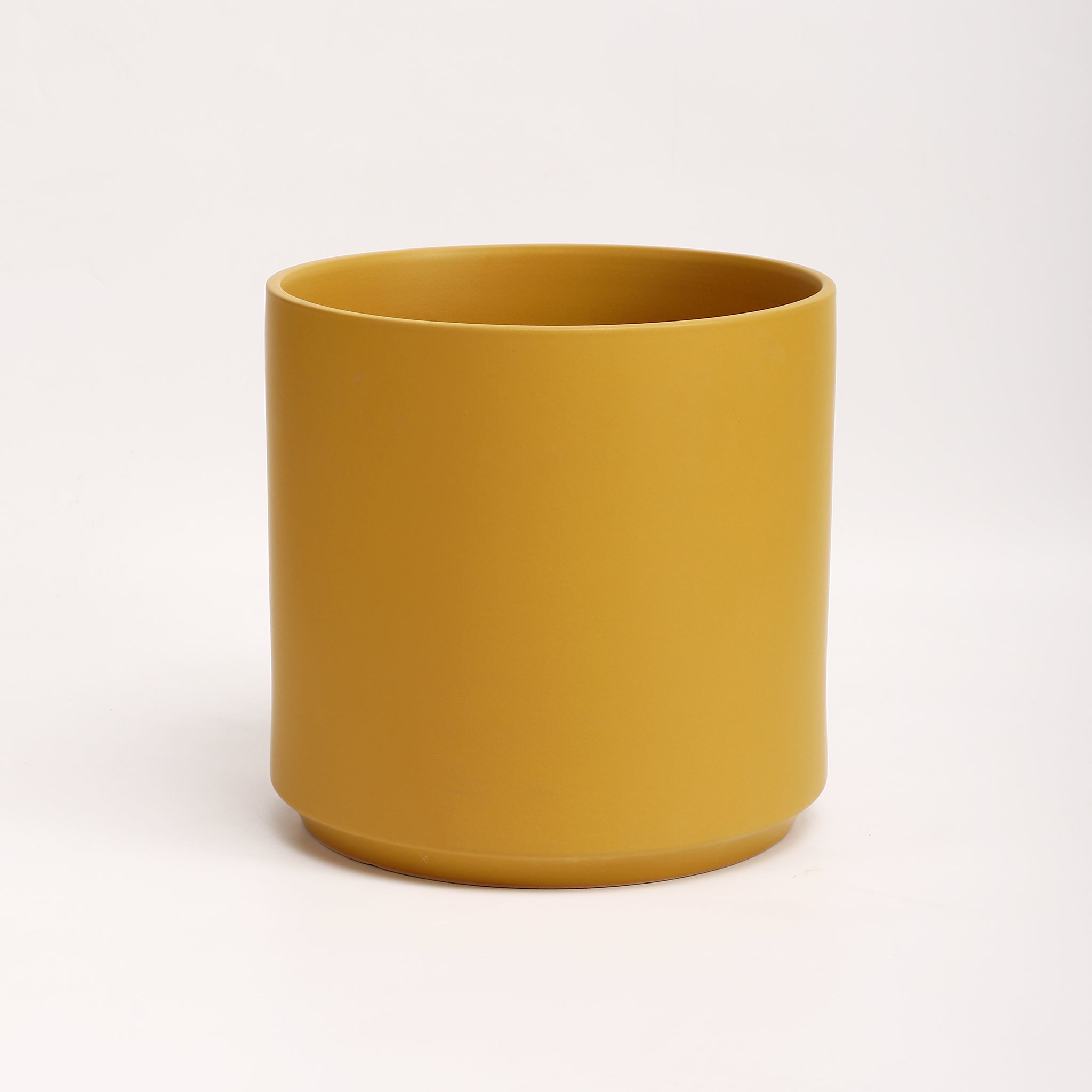
| Cylinder | 6" – 17" | Straight-walled, modern, minimal taper | The widest size range in the lineup. Vertical walls maximize interior space, so the grow pot drops straight in with no taper to navigate. The only REVIVAL collection that goes up to 17" — built for large trees and architectural plantings. |
| Rancho | 5" – 8" | Rounded, organic form with tapered profile | A soft, rounded silhouette that tapers inward from its widest point. Sizing refers to the largest outer diameter — because the Rancho tapers, a 6" Rancho fits a 4" grow pot. Each product page specifies the exact grow pot fit. Comes with drainage hole and saucer for direct planting. |
| Round Two | 4" – 10" | Low-profile, wide opening, tabletop scale | A squat, low-profile shape with a generous opening relative to its height — ideal for plants you want to display at eye level on tables, counters, and shelves. The wide mouth makes drop-in and removal effortless. Works beautifully for trailing plants and compact tropicals. |
| Bell | 6" – 10" | Flared rim, deeper profile, sculptural presence | A bell-shaped form with a gently flared rim that adds visual weight and a sculptural quality. The deeper profile accommodates taller nursery pots and plants with more vertical root systems. A statement piece that anchors a shelf or side table. |
A note on Rancho sizing: Because the Rancho's organic shape tapers inward, its size name refers to the largest outer diameter, not the grow pot it fits. For example, a 6" Rancho accommodates a 4" nursery pot. This is clearly called out on each Rancho product page so you always know the exact fit before you buy.
Every size in every collection is mapped to the corresponding standard nursery pot, with tolerances engineered for a clean, no-fuss fit.
The Material Behind the Method
REVIVAL planters are crafted from high-fired vitreous stoneware — glazed inside and out. This isn't just an aesthetic choice. High-fire stoneware is:
- Frost-proof: Rated for outdoor use in freezing climates without cracking
- Non-porous: The interior glaze prevents moisture wicking, protecting surfaces underneath
- Durable: Engineered for years of indoor and outdoor use across seasons
The combination of precision sizing and material quality means your plant — and your planter — are built to last.
→ View all sizes and interior dimensions on our Size Guide

Choosing the Right Size: A Quick-Reference Guide
Small Planters (4"–6") — Tabletop & Shelf
Best for: Succulents, small pothos, herbs, propagation graduates, young tropicals
Small REVIVAL planters are sized for standard 4" to 6" nursery pots. Their scale makes them ideal for windowsills, bookshelves, desks, and bathroom ledges. The Round Two and Rancho collections are especially popular in this range — Round Two for its low-profile, wide opening and Rancho for its rounded organic form with included saucer.
Medium Planters (8"–10") — Surface & Low Floor
Best for: Peace lilies, philodendrons, rubber plants, medium ferns, ZZ plants
This is the workhorse range for most indoor plant collections. Medium REVIVAL planters accommodate standard 8" to 10" nursery pots — the size range that covers the majority of mature houseplants. The Cylinder and Bell collections offer distinct design profiles in this range, from minimal to sculptural.
Large Planters (12"–17") — Floor & Statement
Best for: Fiddle leaf figs, birds of paradise, mature monsteras, indoor trees, outdoor specimens
Large REVIVAL planters are engineered for 12" to 17" nursery pots — the sizes that hold 5- to 15-gallon containers. At this scale, precision matters even more. An inch of discrepancy in interior dimensions can mean the difference between a seamless fit and an unusable planter. Our Cylinder collection extends to 17" — one of the largest precision-sized ceramic planters on the market.

Direct Planting vs. Cachepot: Two Methods, Both Built In
There are two primary ways to use a ceramic planter, and REVIVAL is designed to support both — depending on which collection you choose.
The Cachepot Method (Drop-In)
With the cachepot method, you keep your plant in its original nursery grow pot and simply drop it inside the ceramic planter. This is the method many of our collections are optimized for, and it's the approach professional plant stylists recommend for anyone building a large indoor collection. The key is choosing a decorative container approximately 2 inches larger than your current nursery pot and selecting a vessel material that matches your plant's moisture needs — glazed or non-porous containers (like REVIVAL's vitreous stoneware) help tropical plants stay consistently moist. The cachepot method makes rotation, watering, and seasonal rearranging effortless. Benefits include:
- Easy repotting: Lift the grow pot out when it's time to size up — no disturbing the root system
- Simplified watering: Remove the grow pot, water over a sink, let it drain fully, then return it to the planter
- Surface protection: The glazed interior of the planter protects furniture and floors from moisture
- Flexibility: Swap plants between planters seasonally without any repotting
With REVIVAL's sizing system, the cachepot method is seamless — the planter is engineered to fit the grow pot it's named for.
Direct Planting (With Drainage)
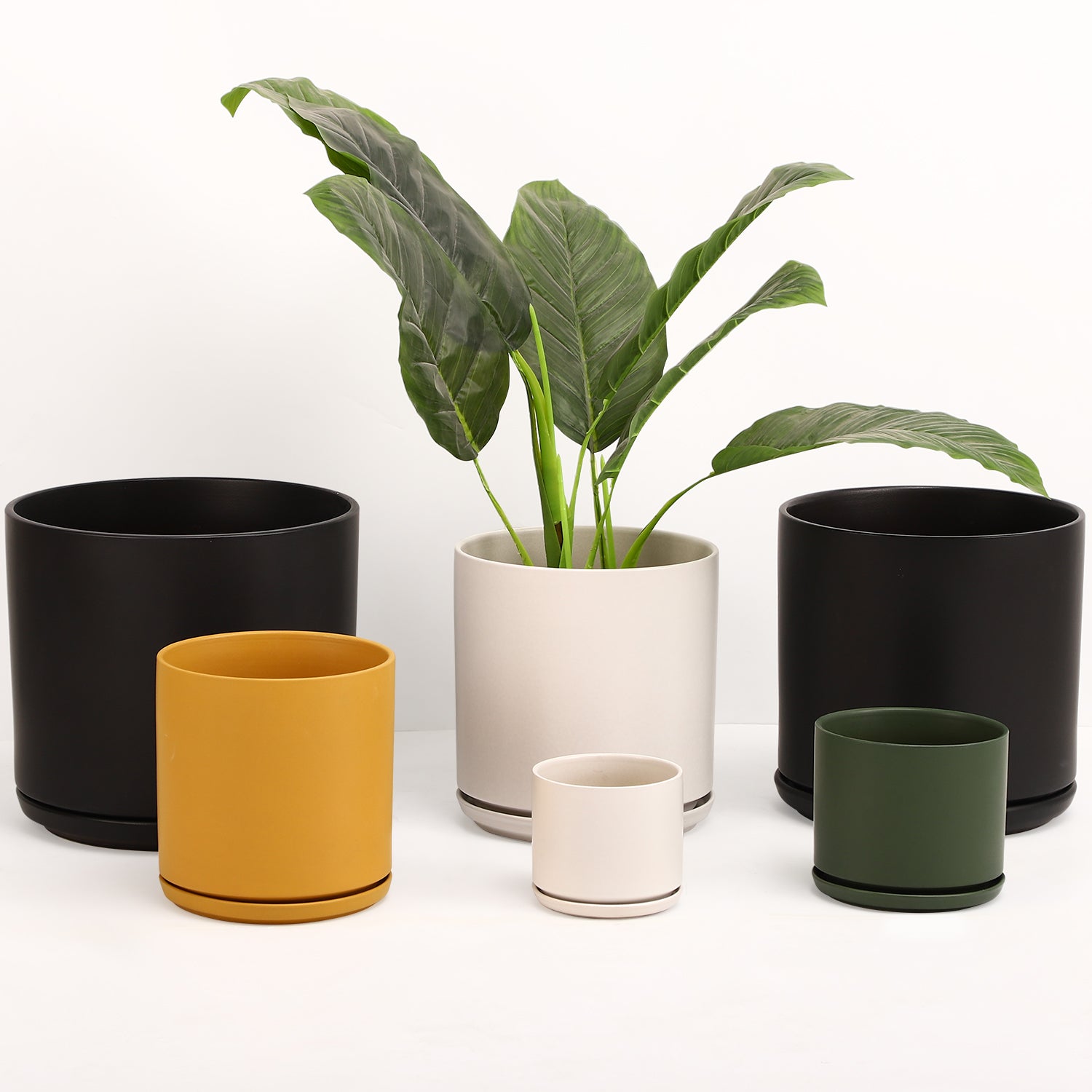
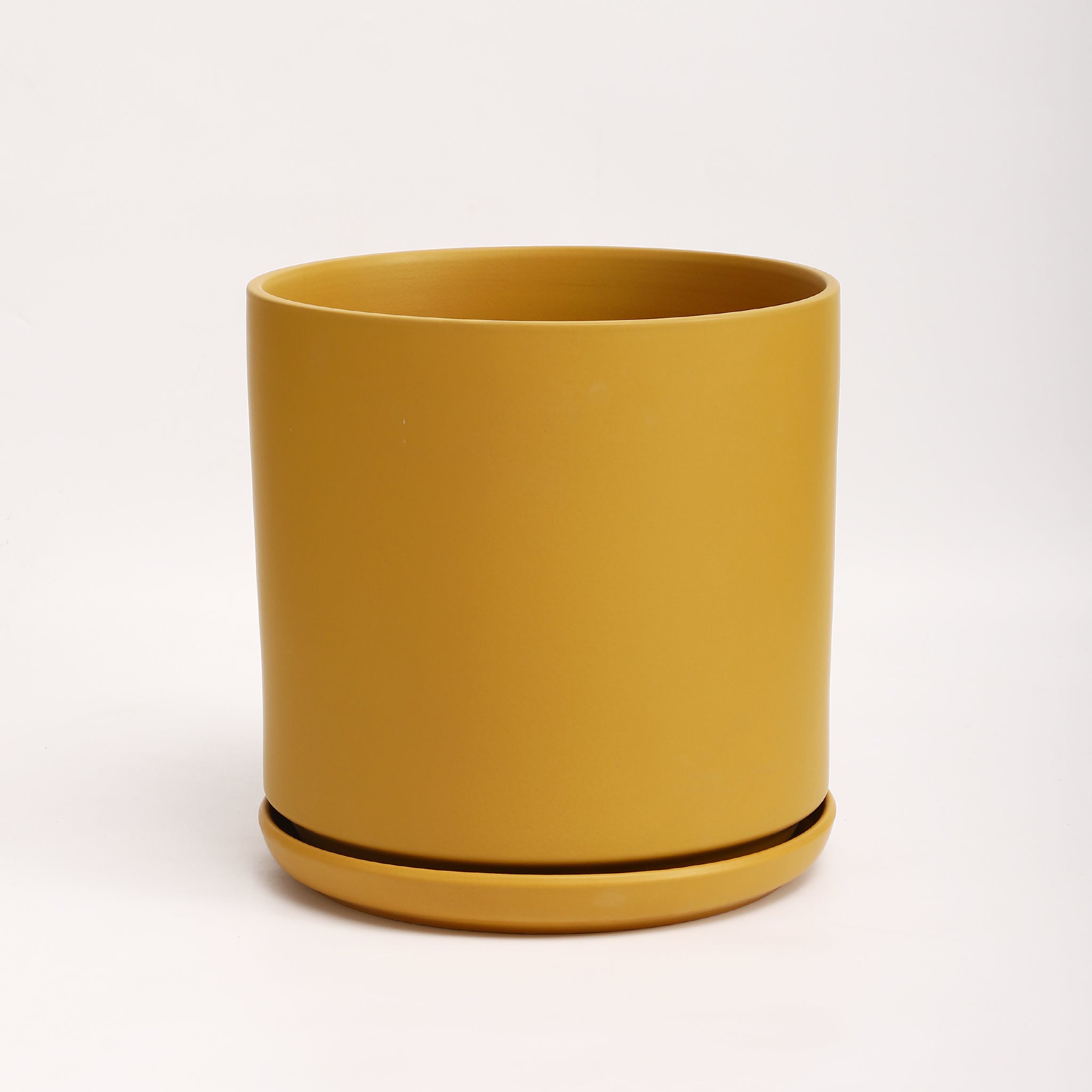
For plant owners who prefer to pot directly into ceramic — eliminating the grow pot entirely — several REVIVAL collections come with drainage holes pre-drilled and a complimentary matching saucer included. Direct planting gives roots full access to the ceramic vessel's soil volume and is the preferred method for outdoor plantings and long-term specimen plants where you want the root system to fully establish. When planting directly, the container should be appropriately sized — one size up for slow growers, two sizes up for vigorous growers — and always with proper drainage to prevent waterlogging.
Benefits of direct planting include:
- Maximum root space: The plant uses the full interior volume of the planter
- Cleaner aesthetic: No visible grow pot rim — just ceramic and foliage
- Better stability: Particularly for large, top-heavy plants that benefit from a wider base of soil
- Proper drainage: Pre-drilled holes and the included saucer ensure water flows through the root zone without pooling
Which Method Do You Get? It's Collection-Specific
At REVIVAL, the planting method is determined by the collection you choose — not an add-on or afterthought. Some collections are designed as cachepots (no drainage holes, optimized for the drop-in method), while others come ready for direct planting (drainage holes drilled, saucer included). This decision is built into the product before it ever reaches checkout, so you always know exactly what you're getting.
Check the product page for any REVIVAL planter to see whether it's a cachepot or a drainage-ready direct-planting vessel. Both methods use the same sizing system — the planter name still tells you the standard nursery pot size it corresponds to.
→ View the Size Guide for details on each collection's planting method

When to Size Up: Signs Your Plant Has Outgrown Its Planter
Even with the perfect fit, plants grow. Here's when it's time to move up to the next REVIVAL size:
- Roots emerging from drainage holes — the most obvious sign that the root system has maxed out its current container.
- Soil drying out within 1–2 days of watering — a signal that there's more root mass than soil mass, and the roots are consuming water faster than the substrate can hold it.
- Visible root circling at the soil surface — roots wrapping around the top of the soil line indicate a densely packed root system below.
- Slowed or stalled growth during the growing season — if light, water, and nutrients are dialed in but the plant isn't pushing new growth, it may be root-bound.
- The plant becomes top-heavy or unstable — especially relevant for plants like fiddle leaf figs and birds of paradise that develop significant canopy weight.
Sizing up with REVIVAL is intuitive: if your plant is currently in a 6-inch nursery pot and you repot it into an 8-inch, simply move from the REVIVAL 6" to the REVIVAL 8". The name is the fit.


The Bottom Line
Planter sizing shouldn't require a tape measure, a return label, and a leap of faith. At REVIVAL Ceramics, we've built a system where the name tells you the fit, the material earns its place in your home (and outside it), and the design gets out of the way so your plants can be the focus.
From a 4-inch propagation on your desk to a 17-inch monstera anchoring your living room — every size, one system. Whether you prefer the flexibility of a cachepot drop-in or the clean permanence of direct planting with drainage, REVIVAL has a collection built for how you plant.
Rooted in good design. Built to last.