
The Planter Size Guide: Small, Medium, and Large, and Where Each One Belongs
There's a question we hear more than almost any other: what size planter actually works here? Not in the abstract, in the specific spot. The empty corner by the window. The console table that needs something besides mail on it. The entryway that feels unfinished every time you walk past it.

The answer isn't really about the plant. It's about the room. Once you know how small, medium, and large planters function in a space, sizing gets simple.
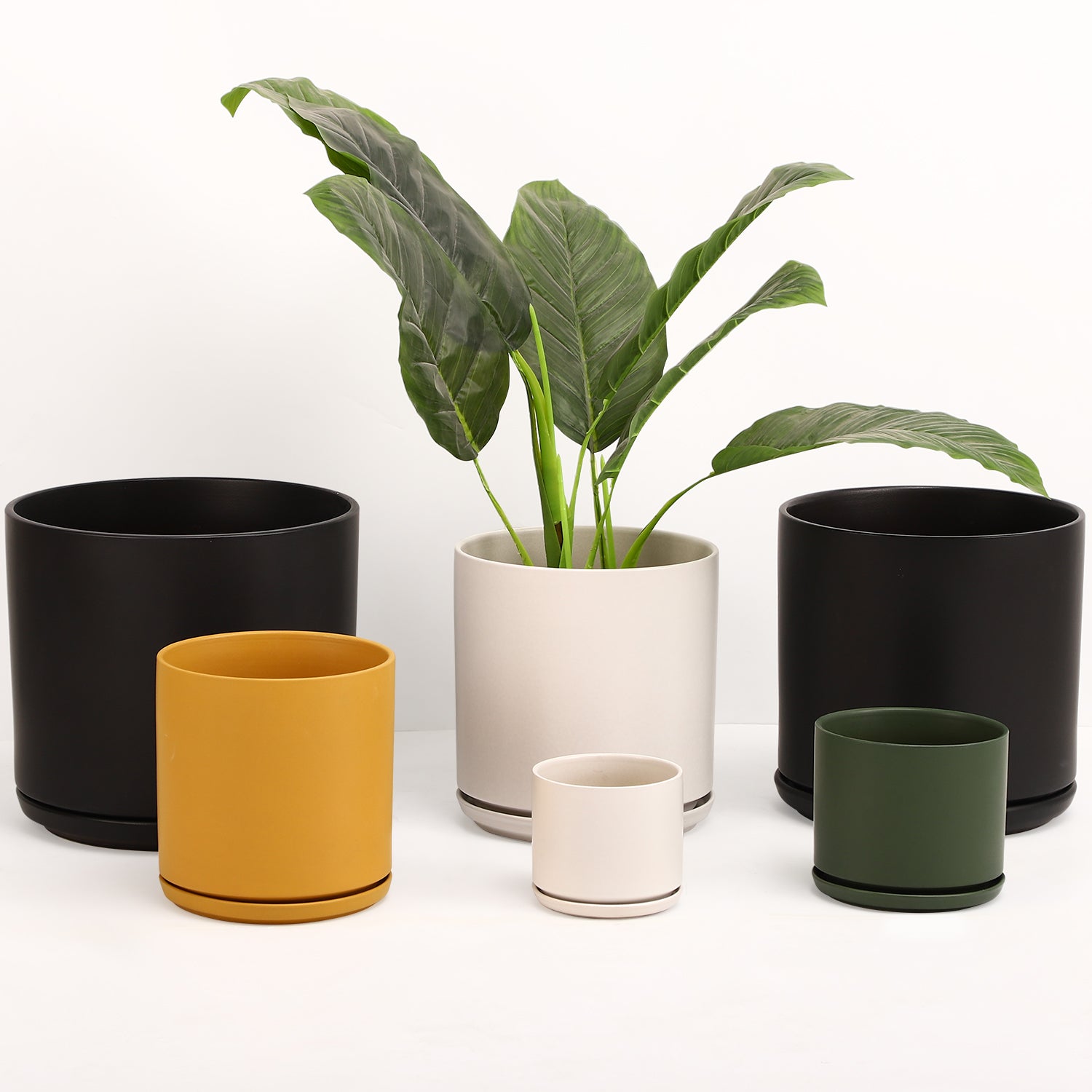
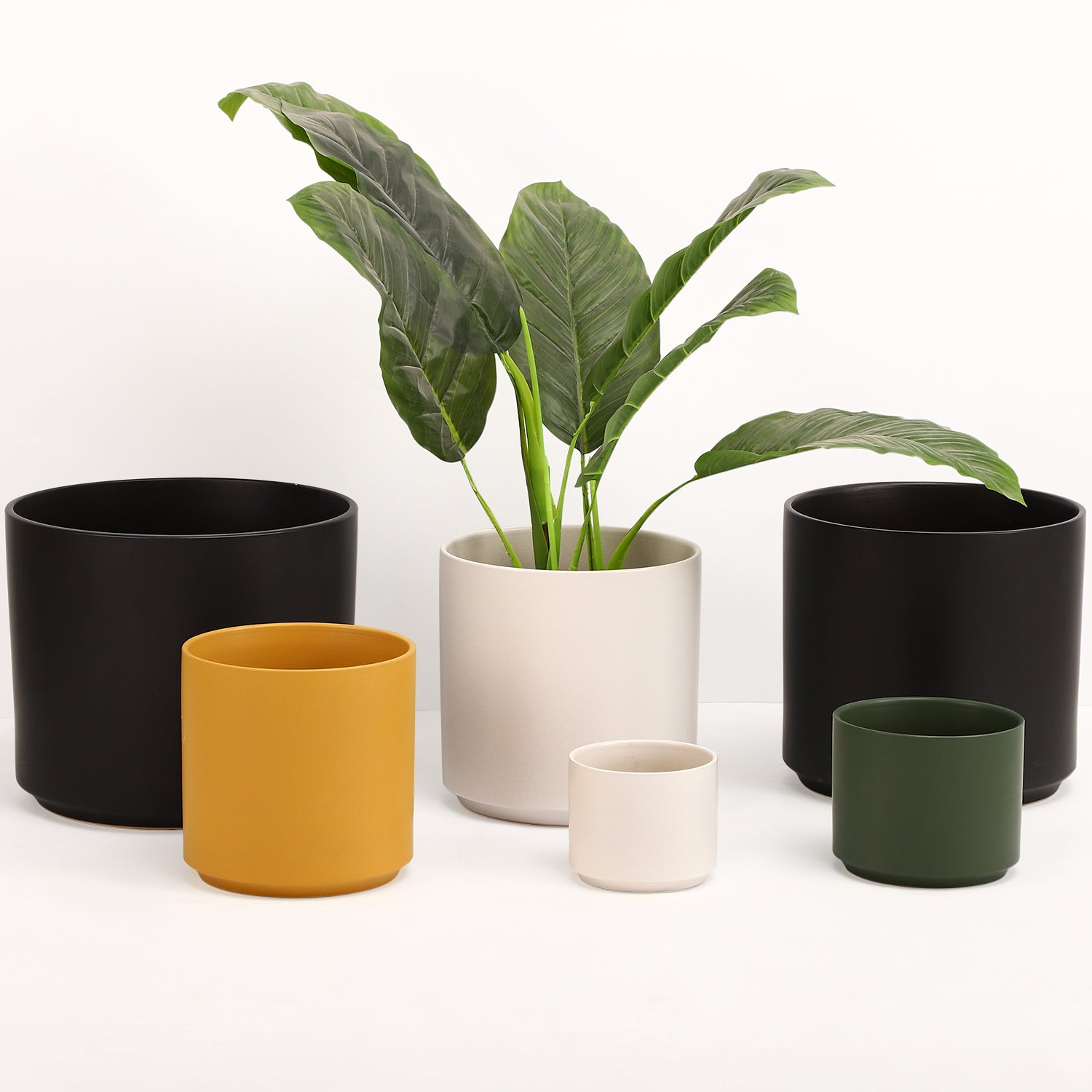
Small planters (4"–7"): shelves, windowsills, side tables
Small is the size most people already own without thinking about it, and it's also the size most often mismatched to its spot. A small planter reads as a detail, not a focal point. It belongs where the eye naturally lands in passing: a windowsill, a bookshelf between stacked spines, a side table next to a lamp.

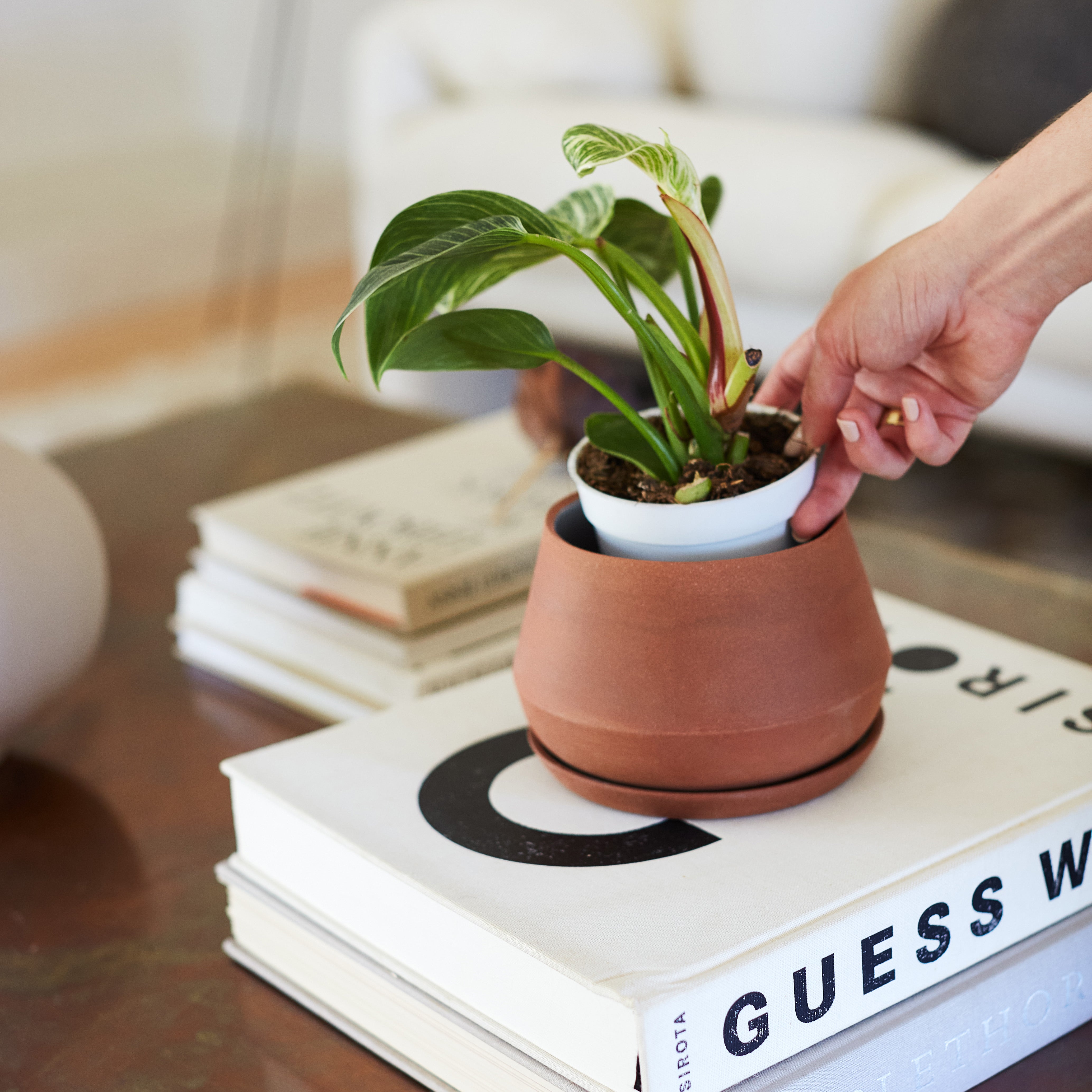
The Rancho, at 4" through 7", is built for exactly this. Its wide belly and rounded taper give it presence even at a small scale, so it doesn't disappear next to a stack of books the way a plainer small pot can. Pair it with a trailing pothos or a compact succulent, and you've got a considered tabletop moment rather than an afterthought.

The Round Two in 4" and 6" does something similar in a different register: cleaner lines, nine colorways, and a shape that reads equally well grouped on open shelving or placed solo on a bathroom vanity. If you're building a shelf vignette, odd-numbered groupings help. Three small planters at slightly different heights read as styled. Two identical ones read as a pair you forgot to finish.
Where small works: windowsills, bookshelves, bathroom vanities, entryway consoles, nightstands
What to avoid: don't use small planters to anchor a floor corner or fill a large gap. They'll look stranded rather than intentional.
Medium planters (8"–10"): counters, dining tables, side tables that need to carry more weight
Medium is the size range with the least competition in styling content, and also the size that does the most quiet work in a room. It's substantial enough to serve as a genuine focal point on a counter or table, but it doesn't compete with furniture the way a large floor planter can.

This is where all three of our lines meet. The Round Two in 8" and 10" carries a coffee table or dining table centerpiece without overwhelming it. The Bell, with its softer curve and quieter profile, is built for exactly this scale.

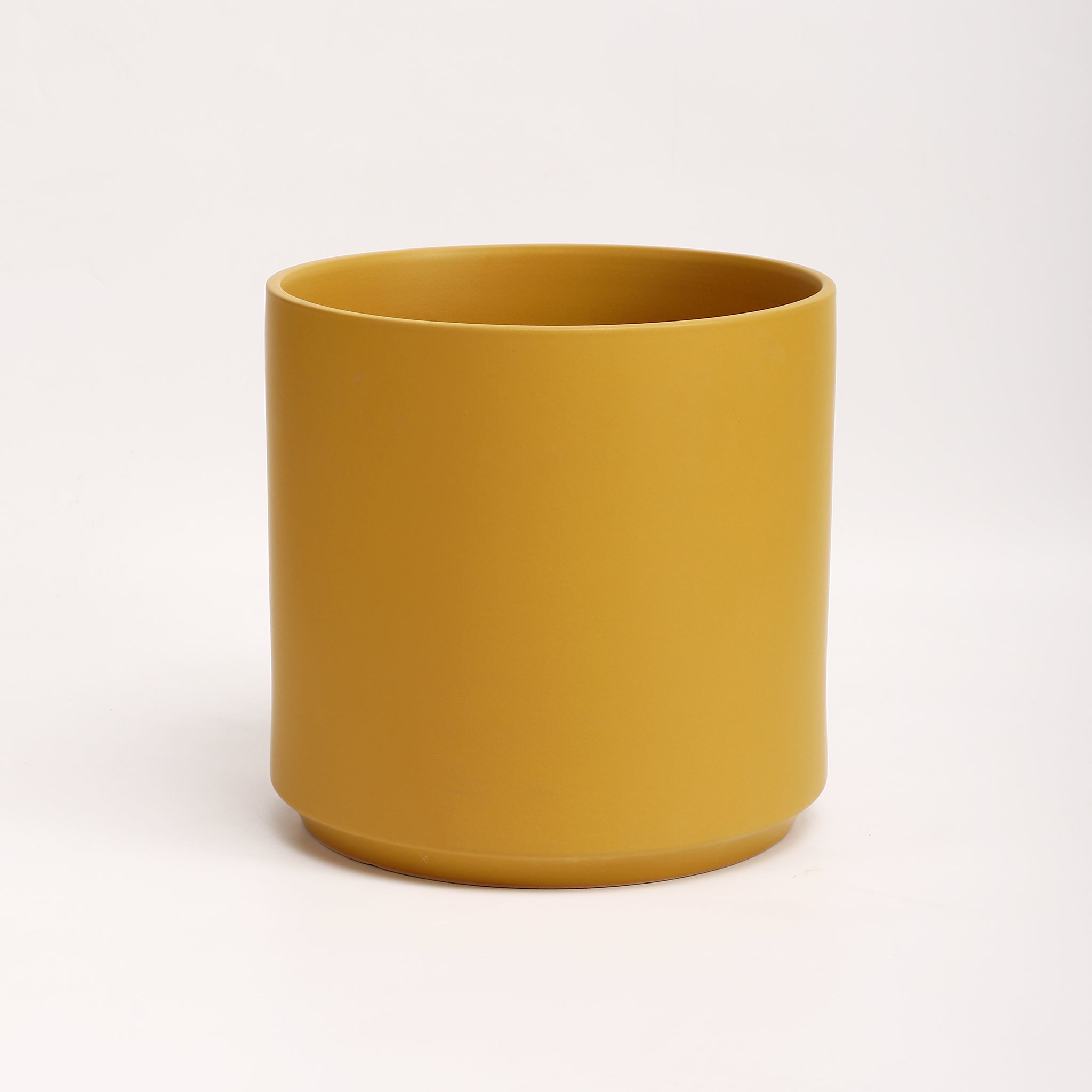
And the Cylinder, at 8"–10", brings the same clean, architectural line that defines the large format, just scaled down for a side table or a console that needs more visual weight than a small planter can give it. If you're furnishing a room from scratch, medium is often the size that gets skipped, jumping straight from a small tabletop pot to a large floor planter. That's a mistake. A room styled only in small and large sizes tends to feel like it's missing a middle register, the way a bookshelf styled only with tall spines and small objects can feel oddly empty in between.
Where medium works: dining tables, kitchen islands, console tables, credenzas, coffee tables
What to avoid: a medium planter on the floor in an otherwise empty corner will read as undersized. Save the floor for large.
Large planters (12"–17"): floors, entryways, and the pieces that anchor a room
Large is the size that does the most visible work and gets the least forgiving margin for error. A large planter placed well can anchor an entryway, define a corner, or give an oversized floor plant the base it deserves. Placed poorly, it becomes an obstacle.

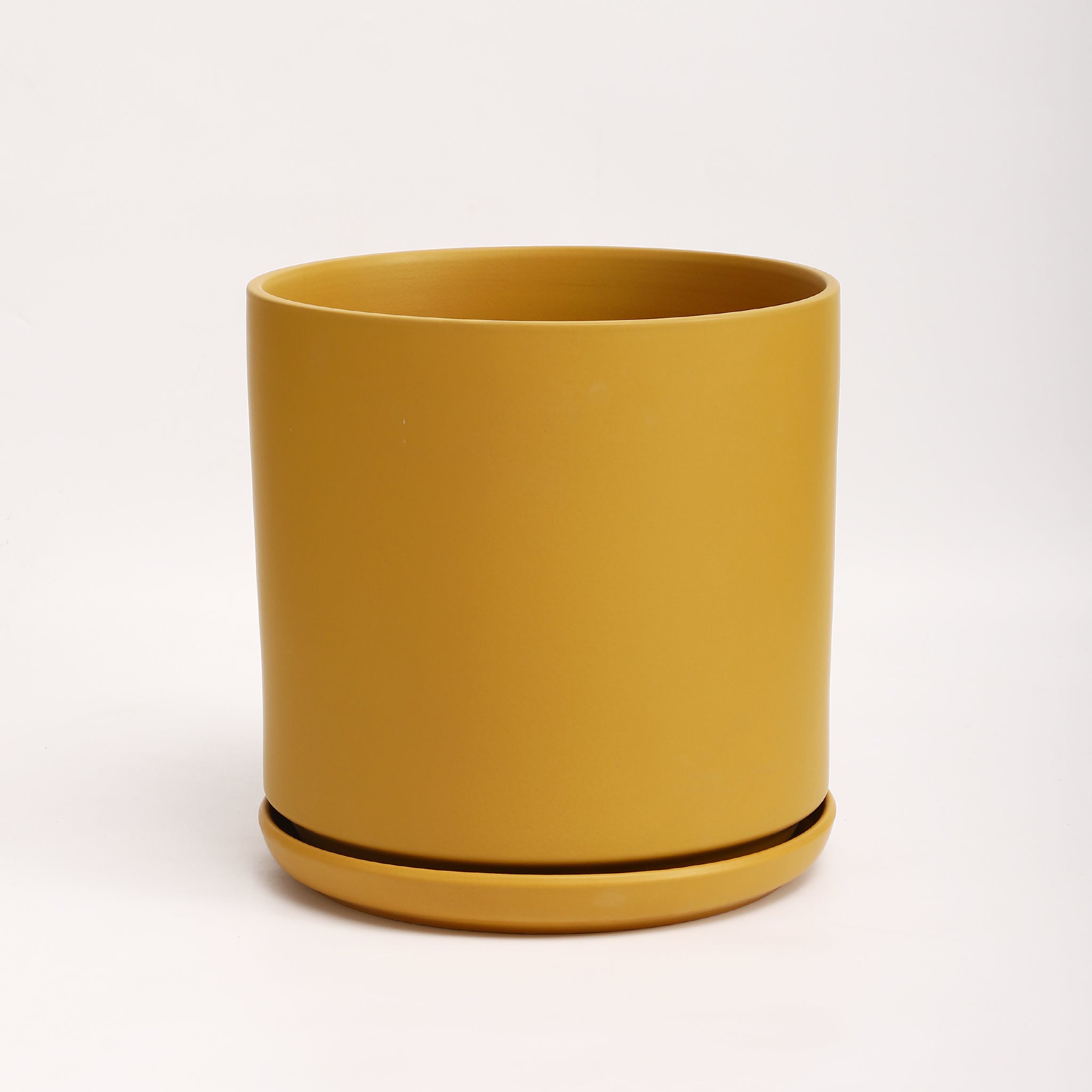
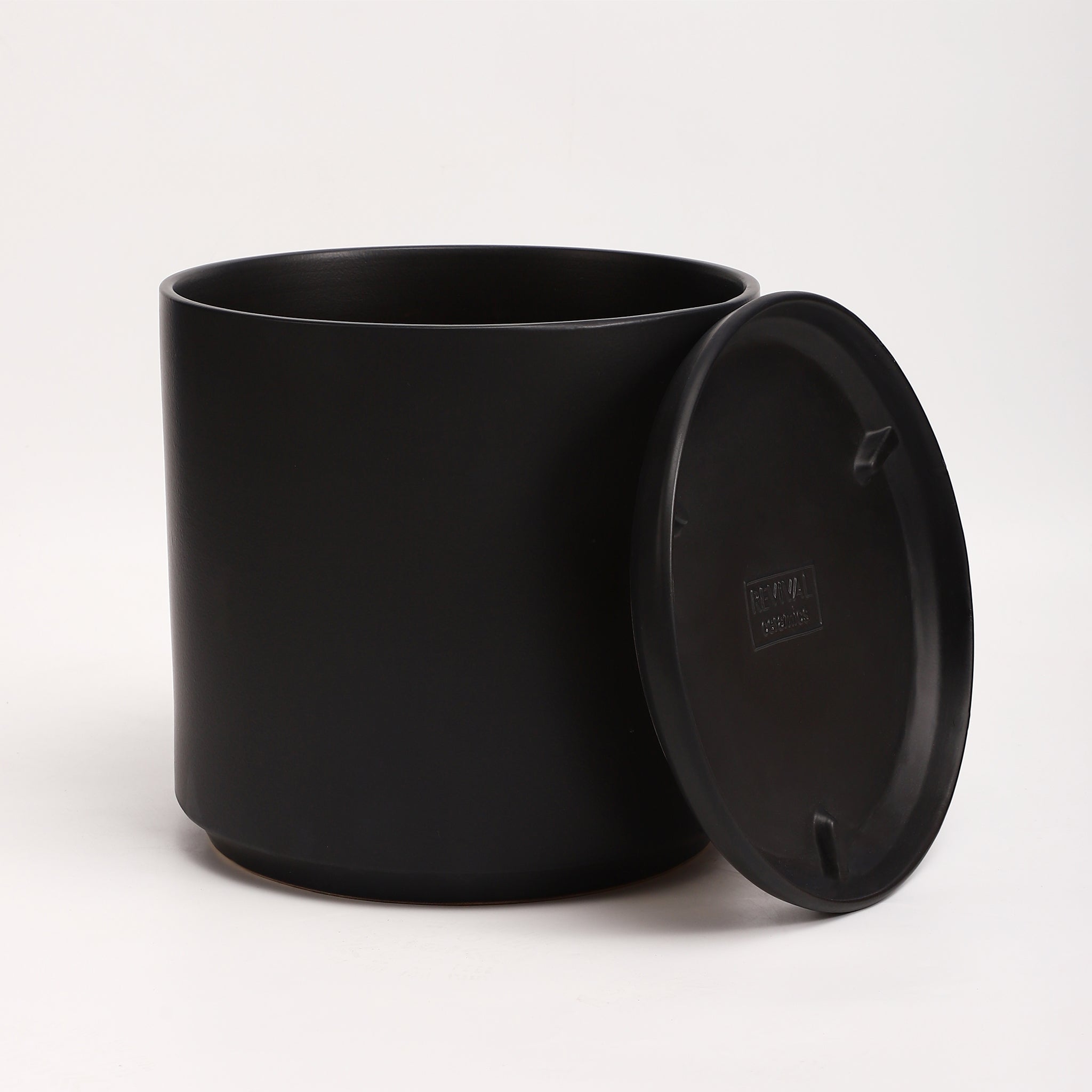
The Cylinder Collection, at 12" through 17", is built for this scale specifically, clean lines that read as architectural rather than decorative, which matters most at a size where the planter itself is doing as much visual work as the plant inside it. The Cylinder with Saucer version adds centered drainage and a stabilizing saucer, worth considering for any large planter carrying real weight, both literally and in terms of how much of the room's sightline it occupies.

A large planter's job is usually one of two things: hold a floor plant that's already sizable, or become the statement itself with a simpler plant inside it. Both work. What doesn't work is choosing a large planter and then under-filling it with a small plant, the proportion reads as a mistake rather than a choice.
Where large works: entryways, empty floor corners, flanking a fireplace or doorway, patios and covered outdoor seating areas
What to avoid: don't split a room's visual weight across multiple large planters unless the room can genuinely support it. One well-placed large planter usually reads better than two competing ones.
What size planter should I use in an entryway?
Large, if the entryway has room for it, 12" and up gives you enough visual weight to register from the doorway. If space is tight, a medium planter (8"–10") on a console still makes an impression without blocking traffic.
What size planter works for a corner of a living room?
Large. A corner is exactly the kind of dead space a 12"–17" planter is built to fill, especially with a floor plant that already has some height to it.
What's the difference between a small, medium, and large planter, practically speaking?
It's less about the plant and more about the surface. Small (4"–7") sits on shelves and side tables. Medium (8"–10") anchors a counter, table, or console. Large (12"–17") lives on the floor and does the heavy lifting in a room's overall composition.
Do I need to match all my planters to one size or color?
No, and we'd actually recommend against it. Rooms read as more considered when sizes and even finishes vary slightly, the same way a bookshelf styled with only one book height looks flat.